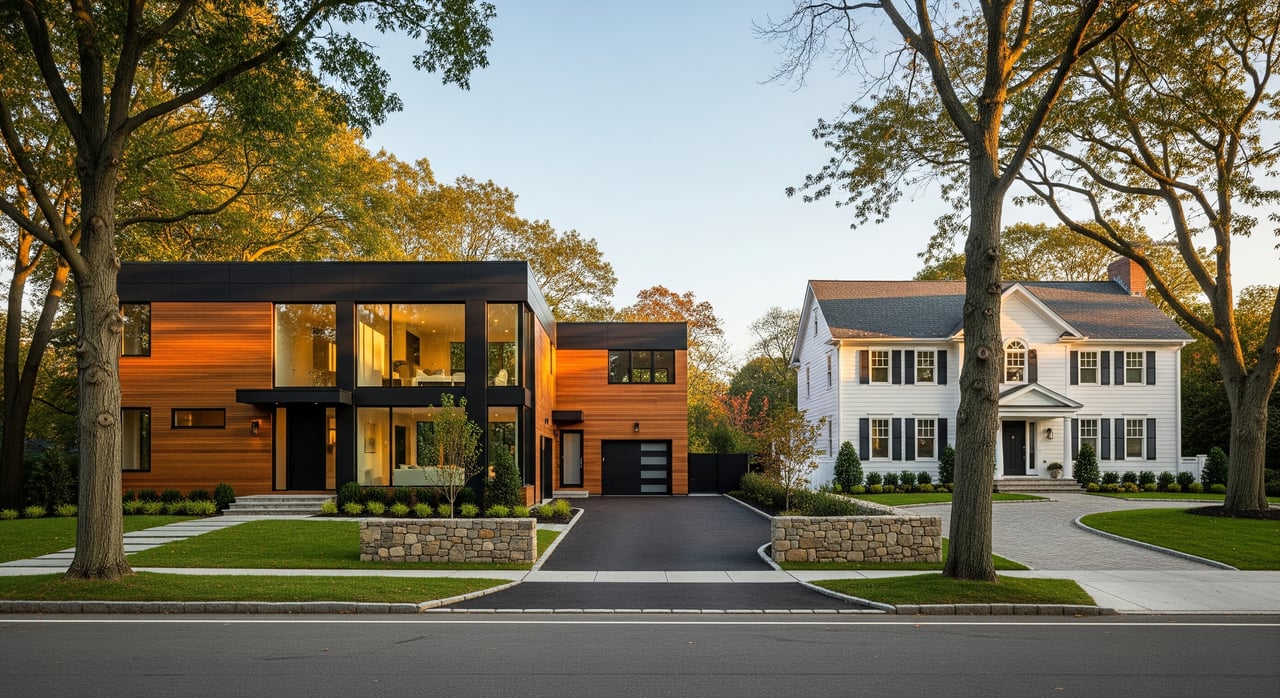
Thinking about buying in Newtown and torn between a brand‑new build and a resale home? You are not alone. As a move‑up buyer, you want the right space, a smooth timeline, and a smart long‑term choice for your family and budget. This guide breaks down how new construction and resale compare in Newtown so you can choose with confidence, avoid surprises, and plan your next move with clear steps. Let’s dive in.
Newtown at a glance
Newtown is a suburban Fairfield County community with a mix of established neighborhoods and newer subdivisions. Many buyers here value larger lots, everyday convenience, and access to regional employment hubs like Danbury, Bridgeport, New Haven, and routes toward New York City. Public water and sewer access varies by parcel, and many homes use well and septic systems, which affects both new builds and resales.
If you are moving up, you may also be timing the sale of your current home. That makes your closing date, financing plan, and risk tolerance especially important as you compare options.
Timeline: how fast you can move
If your move date is fixed or you want a predictable closing, timing may decide the path for you.
- New construction timelines
- Spec or inventory homes often run about 3 to 9 months from contract to move‑in, depending on stage at contract.
- Custom builds commonly take 6 to 18 months, including permitting, site work, construction, inspections, and a certificate of occupancy.
- Weather, materials, and builder scheduling can affect delivery.
- Resale timelines
- Most resale purchases close in about 30 to 60 days after contract.
- Typical inspection periods last 7 to 14 days, followed by any repair or credit negotiations.
Bottom line: If you need to move in 1 to 2 months, resale is usually the faster route. If you have flexibility and want customization, a new build can fit, but build in buffer time.
Inspections and condition risk
Both paths require careful due diligence, just with different focus.
- New construction
- The town conducts inspections at key stages such as foundation, framing, mechanicals, and final. Builders also perform internal checks.
- You should still hire an independent inspector. A pre‑drywall inspection and a final inspection are common best practices.
- Expect a punch list at the final walk‑through and plan follow‑up for any items after closing.
- Resale
- Order a full home inspection. Add specialists as needed, such as septic, well, radon, chimney, pest, or HVAC.
- Aging roofs, windows, or systems may become negotiation points for repairs or credits.
Practical tip: New homes can reduce near‑term maintenance surprises but not eliminate them. Resales can come with character and mature lots, but you should budget for upgrades or replacements as needed.
Customization vs character
Think about how much control you want over layout and finishes.
- New construction
- You can often select layout options, finishes, and sometimes structural changes. Choices depend on the builder and lot.
- Upgrades and change orders add cost and can extend the schedule. Ask for detailed allowances and an inclusions list.
- Resale
- You get immediate character, established yards, and settled neighborhoods. Some homes may need updates to match your style.
- Renovating a resale can be phased over time, which some buyers prefer.
If personalization ranks high for you, new construction offers more control. If you want move‑in timing and a finished neighborhood, resale may feel more comfortable.
Warranties and post‑closing support
Protection after closing varies between the two paths.
- New construction
- Many builders provide tiered warranties. A common structure in the industry is 1 year for workmanship, 2 years for systems, and a longer structural warranty, such as 10 years. Confirm the exact terms in writing.
- Ask how warranty claims are handled and what response times look like.
- Resale
- Resale homes typically do not include builder warranties. You can consider a third‑party home warranty, and you can negotiate repairs or credits during the inspection phase.
If warranty coverage matters to you, a new build provides defined protections for a set period, but you still need to review the details closely.
Neighborhood maturity and amenities
Your day‑to‑day experience goes beyond the house.
- New construction
- Newer subdivisions can have ongoing construction, construction traffic, and evolving landscaping for a period of time.
- Planned amenities may be added later in the build‑out.
- Resale
- Established neighborhoods have mature trees, complete streets, and known traffic patterns. Community resources and school boundaries are typically well defined.
If you value a stable, mature setting now, resale often delivers that. If you want newer infrastructure or a specific lot within a planned community, new construction can fit, with patience for the transition period.
True costs to compare
Look beyond list price to see the real financial picture.
- For new construction, account for:
- Lot premiums, site work, and utility hookups
- Septic and well costs if applicable
- Driveways, walkways, and landscaping
- Window treatments and garage door openers if not included
- Upgrades, change orders, and possible impact or permitting fees
- Potential builder incentives and what they cover
- For resale, account for:
- Near‑term replacements for roof, HVAC, or windows if at end of life
- Renovations for kitchens, baths, flooring, or paint
- Ongoing maintenance for older systems and structures
Compare apples to apples by building a line‑item budget for each property you are considering.
Financing and contingencies
Your financing plan should match your path and your risk tolerance.
- New construction financing
- Options can include construction loans with interest‑only draws, construction‑to‑permanent loans, or builder‑arranged mortgage programs.
- Lenders will tie inspections and appraisals to the draw schedule.
- If you must sell first, consider a bridge loan or a rent‑back to cover the gap until your new home is ready.
- Resale financing
- Standard mortgages and escrow timelines are typical, with inspection and appraisal contingencies.
New construction financing is more complex, so using a lender experienced with construction loans is helpful. Resale is usually simpler if you want a straightforward closing.
Resale value and marketability
Your long‑term value depends on the specific home and neighborhood.
- New construction
- Newer homes can feel premium in the short term. Long‑term appreciation depends on location, lot, build quality, and finishes that match local demand.
- Avoid overbuilding relative to nearby comparables.
- Resale
- Established neighborhoods often provide solid comparable sales. Strategic renovations can enhance appeal and value.
The key is fit. Choose a home aligned with the local market and your long‑term plans.
Decision framework: your quick filter
Rank these questions by importance to you:
- How soon do you need to move? If soon, resale is usually better.
- How important is customization? If very important, new construction helps.
- What is your tolerance for construction disruption and uncertainty? If low, resale may fit.
- Do you need certainty on final price and timing? Resale often provides more predictability.
- Do you prefer a mature neighborhood or large established lot? Resale usually wins here.
- Are school boundaries and established programs a top priority? Resale can offer more immediate clarity.
- Are you comfortable with construction financing or bridge solutions? If not, resale is simpler.
New build checklist for Newtown
Use this when evaluating a specific new construction opportunity:
- Confirm utilities and site:
- Public water and sewer availability versus well and septic
- Septic design approvals and any required testing
- Verify builder and documents:
- Examples of completed homes in town and references from past buyers
- Warranty terms in writing
- Sample contract with allowances, inclusions, and change‑order policy
- Timeline and municipal status:
- Construction schedule with milestones and any delay provisions
- Permitting status and required town inspections
- Any conservation, zoning, or wetland limits affecting buildable area
- Quality control:
- Plan independent inspections at pre‑drywall and final stages
- Set a reminder for an 11‑month warranty walkthrough
Resale checklist for Newtown
Bring this list to each resale you are considering:
- Order a full home inspection and add specialists as needed: septic, well, radon, chimney, pest, or HVAC
- Review town records for past permits, recent renovations, and any zoning or easement notes
- Confirm school boundaries with Newtown Public Schools and observe neighborhood traffic at different times
- Budget for near‑term replacements if major systems are at or past their typical life
Smart questions to ask
- Builders: What is your warranty, how are claims handled, and can you provide local references? What allowances are included, and which upgrades buyers commonly choose?
- Sellers or listing agents: Have permits been pulled for prior renovations? Are there inspection reports or maintenance records? How long have similar homes taken to sell nearby?
Negotiation tips
- New construction
- Ask about credits for closing costs, flooring, or landscaping, as well as upgrade packages.
- Upgrades can be more negotiable than base price, depending on stage and market.
- Resale
- Negotiate price, repairs, or credits after inspections.
- Align closing dates with the sale of your current home to reduce stress.
Local action steps
- Contact the Town of Newtown Building Department about permitting and inspections.
- Check with the Newtown Health Department or Sanitarian on septic and well rules.
- Call the Newtown Assessor’s Office to discuss the mill rate and how taxes could apply to your property.
- Verify subdivision rules, setbacks, and any recorded covenants with Planning and Zoning.
- Speak with lenders experienced in Connecticut construction loans about draw schedules and options.
- Hire independent inspectors who understand new construction for pre‑drywall and final reviews.
- Request references from local builders’ past clients to gauge workmanship and warranty response.
- Confirm school enrollment zones with Newtown Public Schools for specific addresses.
When Heather recommends each path
- Choose new construction when:
- You want a tailored floor plan or a modern layout that is hard to find in current resale inventory
- You have 6 to 12 or more months of flexibility and can manage the gap between selling and moving in
- You value low‑maintenance systems with new‑home warranty coverage and are comfortable with a developing neighborhood
- Lot features like orientation, views, or privacy are high priorities and available with new sites
- Choose resale when:
- You need to move within 1 to 2 months or want a predictable closing date
- You prefer mature landscaping and an established neighborhood feel
- You want to negotiate on a finished home and avoid change‑order uncertainty
- You would like to keep financing simple and avoid construction loans
- Consider a hybrid:
- Buy a resale that meets most needs and renovate key areas. This can be faster than a custom build yet still deliver personalization.
Sample timelines
- Resale
- Offer accepted → 7 to 14 days for inspections → negotiate repairs or credits → 2 to 4 weeks for appraisal and underwriting → close in about 30 to 60 days.
- New spec home
- Contract on an inventory home → 2 to 6 months to completion, depending on stage → final inspections and certificate of occupancy → closing.
- Custom new build
- Site work and permits for 1 to 3 months → construction for 6 to 12 months → final inspections and certificate of occupancy. Total of about 9 to 18 months.
- Construction loan outline
- Lender pre‑approval → lot or contract closing → construction draws by schedule → convert to permanent mortgage at completion.
Your next steps
If you are weighing new construction against resale in Newtown, start by ranking your timeline and customization needs, then build a simple side‑by‑side cost and financing plan. Use the checklists above to vet each home and confirm details with the Town of Newtown and your lender.
When you are ready to talk specifics, connect with a local advisor who can coordinate with town departments, recommend experienced inspectors and lenders, and keep your sale and purchase aligned. If you want a thoughtful plan tailored to your timing and family goals, reach out to Heather Lindgren for a conversation.
FAQs
What is the fastest way to move into a Newtown home?
- Resale is typically fastest, with many closings in about 30 to 60 days from contract, assuming standard inspections and mortgage processing.
How long does a custom new build in Newtown take?
- A custom build commonly takes 6 to 18 months including permitting, site work, construction, inspections, and the certificate of occupancy.
Do I still need an inspection on a new construction home?
- Yes. Schedule independent inspections at pre‑drywall and final stages, even though the town and builder perform their own checks.
What extra costs should I expect with new construction?
- Plan for site work, utility hookups, septic or well needs, landscaping, driveway, window treatments, and any upgrades or change orders.
How can I bridge the gap if my resale closes before my new build is ready?
- Consider a bridge loan or a rent‑back arrangement, and work with lenders experienced in construction financing.
Who should I contact in Newtown to verify permits and utilities?
- Start with the Town of Newtown Building Department for permits, the Health Department for septic and well rules, and the Assessor’s Office for tax questions.