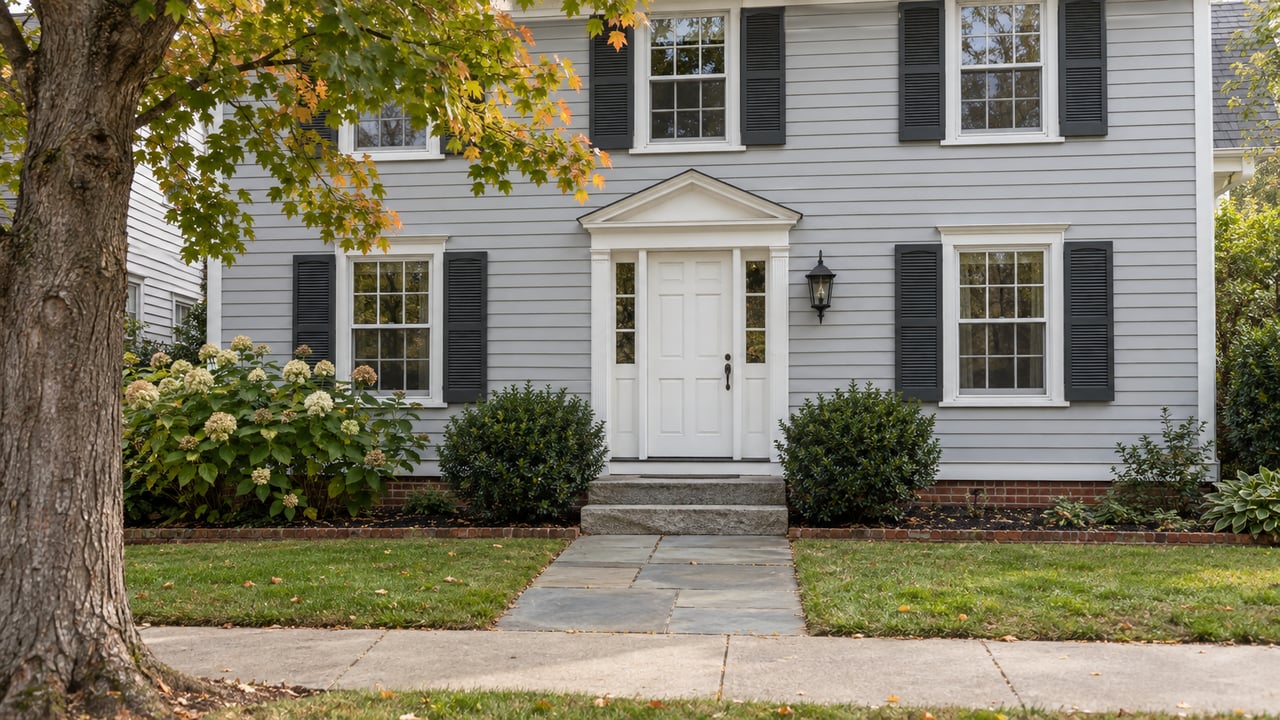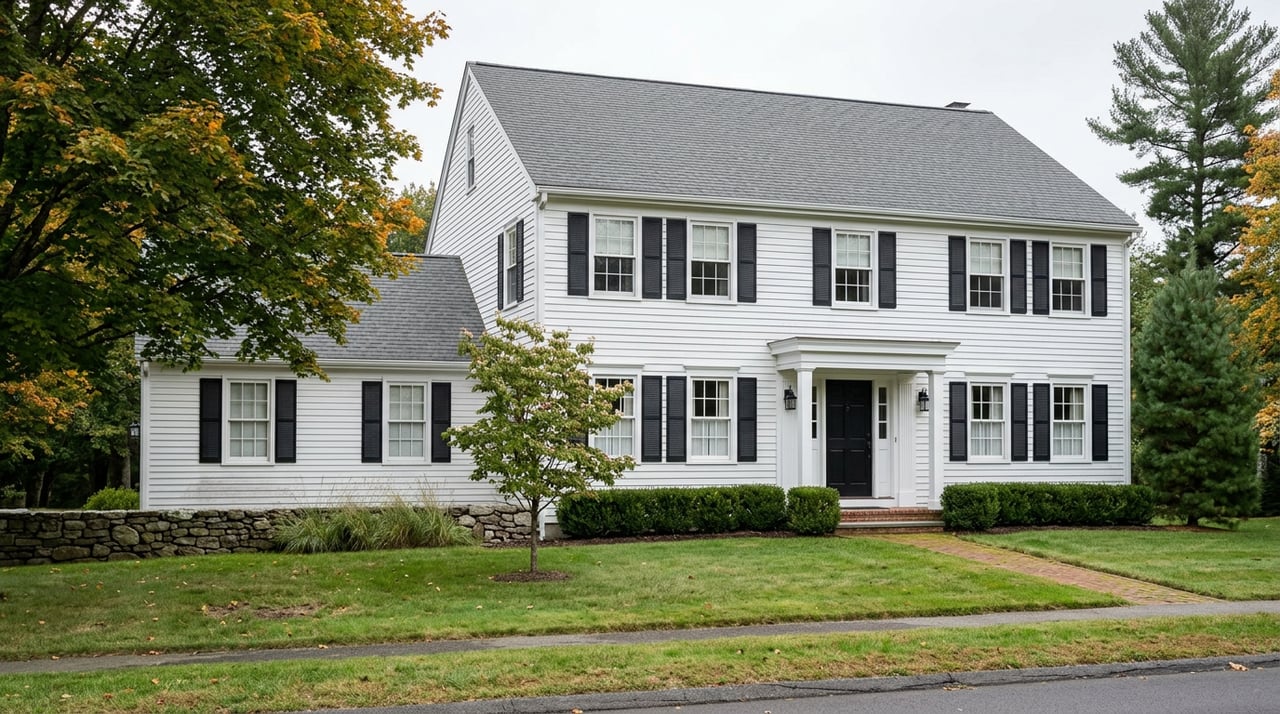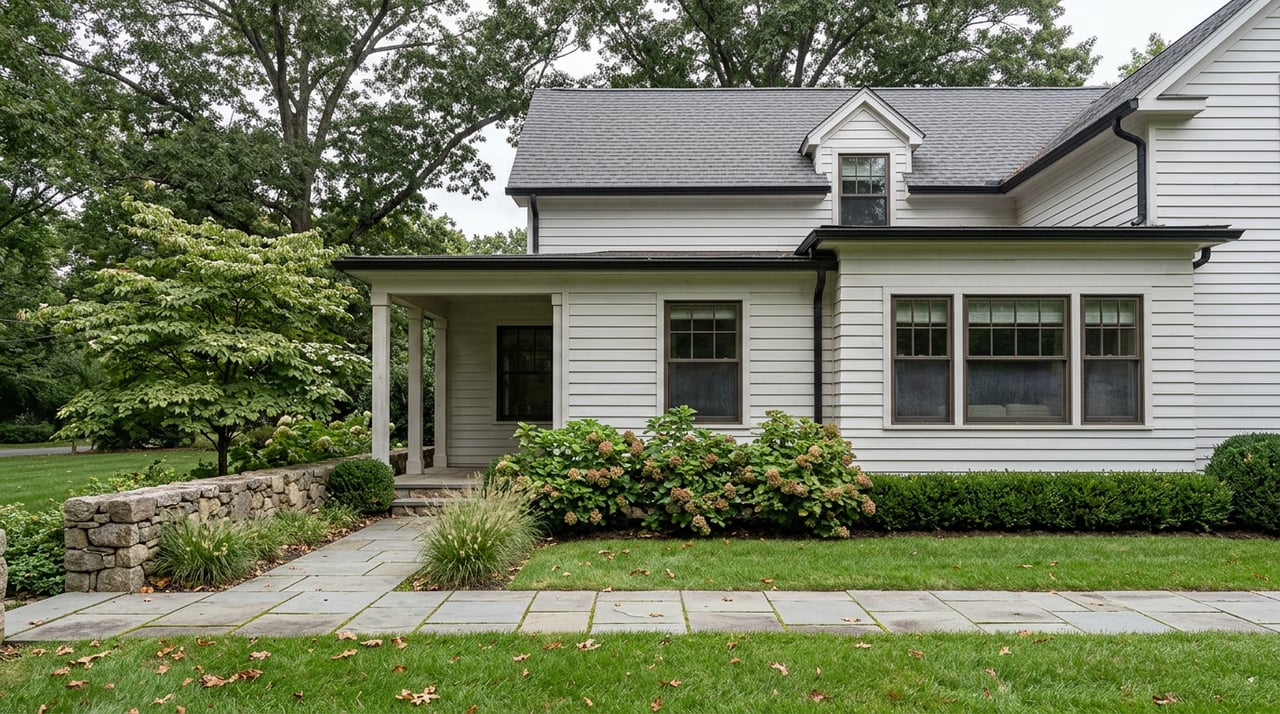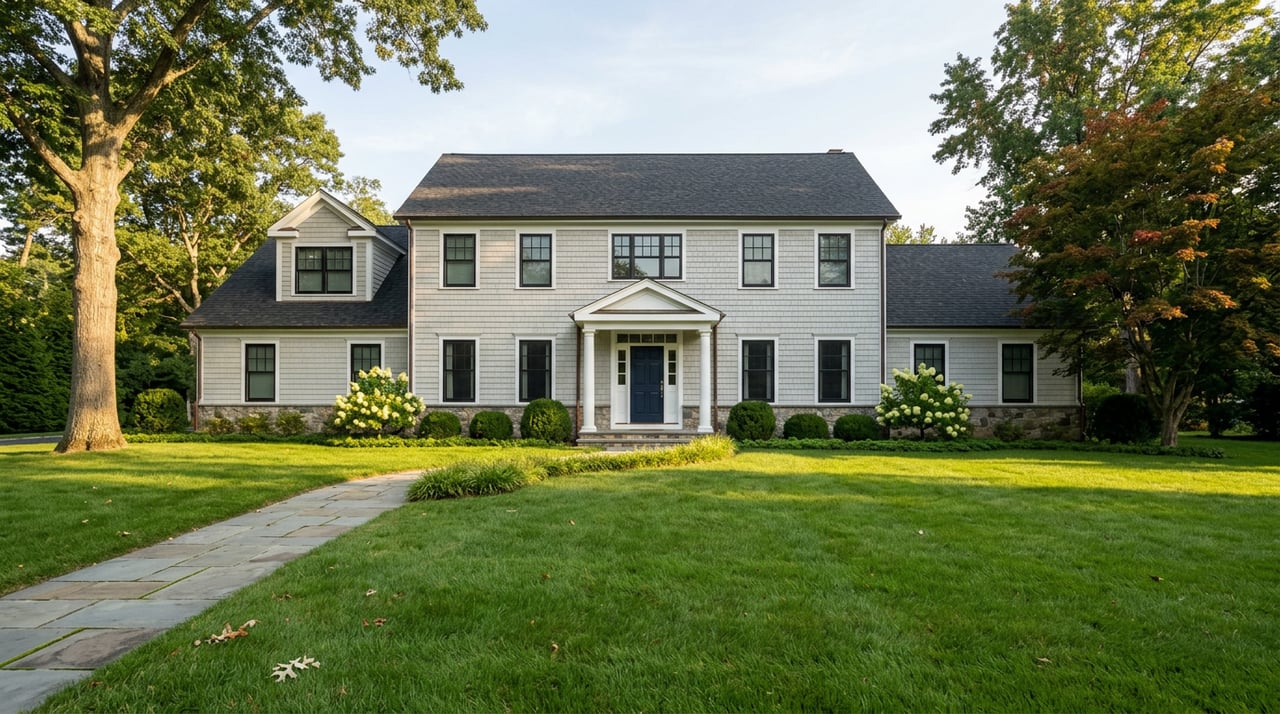
"There's a gap in the housing cycle in Georgetown," planner Laura Pirie told a room of Redding residents last year. Over 90 percent of the homes there sit on two-acre single-family lots, she said. No starter homes. No place to downsize into. Just one housing type, repeated.
If you've spent any time comparing Redding listings against Wilton or Ridgefield, you already know the feeling Pirie was describing. You can find colonials on wooded acreage. You will not find a townhouse, a small condo, or a walkable two-bedroom near a train platform. That absence is not a quirk of buyer taste. It traces back to one specific piece of ground, and that ground just spent fourteen months in public meetings deciding what comes next.
The wall buyers hit
Most Fairfield County towns have some kind of village center that does double duty, offering a mix of housing scales instead of just one. Redding's equivalent is Georgetown Village, a crossroads where the borders of Redding, Wilton, Ridgefield, and Weston meet along the Norwalk River. On paper, it should be the one place in town where a buyer could find something other than a colonial on a two-acre lot.
It isn't, and the reason has nothing to do with what today's buyers want. It has to do with a single 44-acre property that has been legally tied up since before most of those buyers were house hunting.
A mill that closed in 1989 and didn't let go until 2021
Georgetown Village grew up around the Gilbert & Bennett wire mill, a 19th-century manufacturing complex that anchored the crossroads for generations. According to the Town of Redding's own account of the property, the mill closed in 1989. What followed was not a quick redevelopment. Tax liens went unpaid for years, an ambitious mixed-use plan from a private developer collapsed, and the town eventually filed for foreclosure. The case went all the way to the Connecticut Supreme Court before Redding regained title to the property in February 2021.
"We lost 10 years when the property was caught up in court," said Kate Perry, secretary of the nonprofit Georgetown Village Restoration, describing the stretch of litigation that kept the site frozen.
Here is the part that matters for anyone comparing towns right now: while that lawsuit worked its way through the courts, Georgetown Village could not add a single new housing unit. Not a townhouse, not a small apartment building, not a duplex. The one corner of Redding built at village density, walkable to a Metro-North stop, simply stopped evolving for over three decades. Everything built or preserved elsewhere in town continued on the large-lot pattern that has always governed Redding outside its village core. The result is a town where the "missing middle" of housing, the smaller units that usually cluster around a train station or a Main Street, never got built anywhere.
Here's the rough shape of that timeline:
| Year | What happened |
|---|---|
| 1989 | Gilbert & Bennett mill closes |
| 2015 | Town of Redding files for foreclosure over unpaid taxes |
| 2021 | Title transfers to the Town of Redding in February |
| 2024 | Town receives a $200,000 state Brownfield planning grant and a nearly $2 million EPA cleanup grant |
| 2025-2026 | Pirie Associates leads the Revitalize Georgetown community planning process |
What just changed, and what didn't
Between May 2025 and July 2026, the town ran a community planning process called Revitalize Georgetown, funded by that $200,000 grant from Connecticut's Department of Economic and Community Development. The consultant team, led by Pirie Associates with real estate advisors from BJH Advisors and engineers from Langan, held focus groups, community meetings, and surveys with Redding residents to shape a vision plan for the village's future.
At one of the public workshops, Steve Jacobs of BJH Advisors offered a figure that should catch the attention of anyone tracking inventory in this part of Fairfield County: Georgetown, he estimated, could support 140 to 150 new multifamily units per year once redevelopment gets underway. That is not a permit application. It is a market capacity estimate from a planning workshop, and Redding still needs zoning approvals, a phased developer strategy, and actual construction financing before any of those units exist. But it is the first time in years that a specific number has been attached to what a functioning Georgetown could add to the town's housing mix.
Pirie put the underlying logic simply at that same workshop: a healthy town lets a household buy a starter home, grow into something larger, and eventually downsize without leaving. "That's a healthy complete housing cycle," she said. Redding, as things stand today, doesn't have that cycle. The planning process was the town's first structured attempt to figure out how to build it back, with the village crossroads as the only site zoned to hold it.
The village didn't disappear, even while the housing did
What actually stalled deserves a precise answer. Georgetown's commercial fabric kept going even while its housing stock stayed frozen. PopUp Bagels operates on Main Street. Uncle Leo's Deli is a fixture of the same block. The Granite Church, a former Gilbert Memorial Church building, now runs as a nonprofit gathering space for arts and community events. None of that closed down during the litigation years. What stopped was new housing construction on the mill parcel itself, the one piece of land in town actually zoned for something other than large single-family lots.
That distinction matters if you're touring Redding and wondering why a town with an active, walkable village center still has almost no smaller-format housing near it. The businesses survived the frozen decades. The housing supply didn't get the chance to grow alongside them.
What this means if you're comparing Redding to its neighbors
If you're weighing Redding against Wilton, Ridgefield, or Weston and wondering why the housing type options feel so different, the answer isn't a difference in each town's overall zoning philosophy. It's that Redding's one village-density parcel has gone 37 years without new housing construction, first because the mill itself shut down, then because a tax foreclosure fight over the land dragged all the way to the Connecticut Supreme Court. The large-lot colonial you're touring in Redding isn't evidence that the town rejects smaller housing everywhere. It's evidence that the only place built to hold something different has been legally unavailable for longer than most current buyers have been house hunting.
For buyers hoping today's tour will turn up a townhouse or small condo near the Georgetown train stop, that inventory doesn't exist yet, and the Revitalize Georgetown plan is a vision document, not a construction timeline. Given how long this site has taken to move through each prior stage, from bankruptcy to foreclosure to title transfer to planning grant, a realistic buyer should treat any future units as a multi-year story rather than something to factor into a purchase decision this year.
For sellers of existing large-lot homes elsewhere in Redding, the near-term comp pool isn't changing. The Revitalize Georgetown plan governs one 44-acre crossroads, not the zoning that applies to the rest of town. If and when Georgetown redevelopment gets underway, it's more likely to expand what Redding offers than to compete directly with the large-lot inventory that already defines most of the town.
Straight answers for buyers weighing Redding
Is there new housing available in Georgetown Village right now? No. The Revitalize Georgetown process that concluded in July 2026 produced a community vision plan, not approved units. Any construction would require further zoning action and a developer commitment.
Why did it take so long just to get a plan? The site was tied up in a tax foreclosure case that went to the Connecticut Supreme Court before the town regained title in February 2021. The planning process only began once the town had clear ownership.
Does this affect home values in the rest of Redding? Not directly, at least not yet. The plan addresses one specific parcel at the village crossroads. The large-lot zoning that governs most of the town is unrelated to what happens on the mill site.
Redding's housing stock tells a specific story, not a generic one, and the Georgetown crossroads is where that story is still being written. If you're trying to figure out whether this town fits what you're looking for, or whether a neighboring town might get you closer to it faster, Heather Lindgren can walk through what's actually available today versus what's still years out. Contact Heather to discuss your next move.