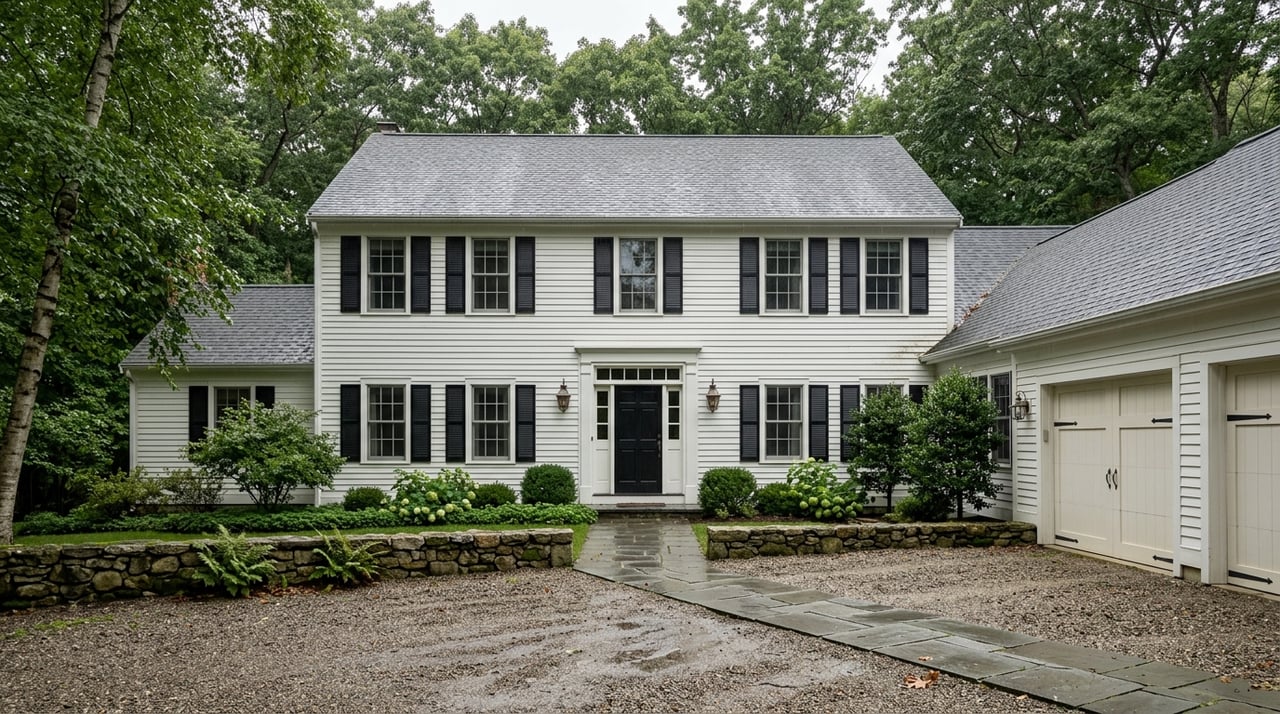
If you look at Redding as one big market, you can miss what really drives value. A home near the train in West Redding competes differently than a scenic-road property tucked into the rural interior, even if both have similar square footage. If you are buying or selling in Redding, understanding those differences can help you price more accurately, market more effectively, and make better decisions. Let’s dive in.
Why Redding Works in Micro-Markets
Redding is not a uniform housing market. According to the U.S. Census Bureau’s Redding town profile, the town has a population of 8,830, a 91.6% owner-occupied housing rate, and an estimated median owner-occupied home value of $706,300. It also has a commuter profile, with a mean travel time to work of 36.1 minutes.
That broad snapshot is useful, but it does not tell the full story. The Town of Redding Plan of Conservation and Development shows why: Redding spans about 32 square miles of hilly terrain, and 97.4% of the town is zoned for single-family residential use on minimum lots of two acres or larger. With so much low-density land and so many differences in setting, access, and infrastructure, townwide averages often hide more than they reveal.
Redding’s shared public school structure also reinforces this point. The town states that students are served by the Easton-Redding-Region 9 School District, including Redding Elementary School, John Read Middle School, and Joel Barlow High School. Because that school framework is shared townwide, many of the meaningful pricing differences come from location, utility setup, road access, and neighborhood context rather than school assignment.
West Redding and Rail Access
West Redding stands out as the town’s clearest rail-linked micro-market. The town plan describes West Redding Center as a small enclave with the train station, post office, Brookside Park, residences, and business uses, and the MTA station page for Redding identifies the station on Metro-North’s Danbury Branch as accessible.
For buyers, that can make West Redding especially relevant if your routine depends on train access or you want easier day-to-day connections beyond town. For sellers, that means a listing here may need to be positioned around convenience, station access, and the appeal of being near an established village-style node. That is a very different strategy than marketing a deeply private country property.
The town plan also points to West Redding as a proposed mixed commercial and residential center and highlights transit-oriented development as a planning goal. That planning context matters because it shapes how people think about this area, both today and over time.
Redding Center and Historic Character
Redding Center is the town’s civic and historic core. The town identifies it as a place anchored by Town Hall, the Town Hall Green, the Old Town House, the First Congregational Church, and a notable collection of preserved historic dwellings. The Redding Center National Register Historic District covers about 55 contiguous acres and includes 39 contributing resources.
This part of town tends to be less about convenience alone and more about setting, architecture, and civic identity. Buyers who are drawn to Redding Center are often responding to the feel of the area as much as the finish level of an individual home. That can influence both pricing and presentation.
It is also worth noting that the town explains its National Register properties in Redding are honorary and non-restrictive. Even so, historic designation can still shape buyer perception and marketing because it signals character, continuity, and a distinct sense of place.
Georgetown and Redevelopment Potential
Georgetown is one of the most distinct micro-markets in Redding because it has a village structure and an evolving redevelopment story. The town says Georgetown Village grew around the Gilbert & Bennett Wire Mill, spans portions of four towns, and is divided by the Norwalk River and two state highways. It also notes that the Georgetown sewer district serves the area, with sewer charges billed on 77 connected parcels.
That infrastructure difference matters. In a town where many homes rely on well and septic systems, village-scale water and sewer access can put Georgetown in a different category when buyers compare homes. It can affect how a property is valued, how future possibilities are perceived, and what type of buyer may be most interested.
Georgetown is also changing in real time. The town’s Revitalize Georgetown project notes that a 2025 planning study is underway, and the Gilbert & Bennett site has received state and federal brownfield planning and cleanup support. For buyers, that means understanding both current conditions and the timeline of future changes. For sellers, it means your marketing strategy may need to address not just what the property is today, but how this area is evolving.
Redding Ridge and Road Exposure
Redding Ridge has its own identity as an old village along Black Rock Turnpike. The town plan describes it as having more than 100 dwellings, several businesses, churches, cemeteries, and a post office. It also notes the importance of preserving the area’s historic and residential feel as Route 58 carries increasing traffic.
This creates a different pricing conversation from the deeper interior of town. A home in Redding Ridge may offer convenience and visibility, but traffic exposure can also shape buyer response. In practical terms, that means two homes with similar features may perform differently based on road setting alone.
For sellers, it is important to present this type of property honestly and strategically. For buyers, it helps to weigh convenience against noise, traffic patterns, and the overall feel of the road network.
Rural Interior and Scenic Roads
Much of Redding’s identity comes from its rural interior. The town plan describes narrow, meandering roads, stone walls, abrupt grades, and sharp turns as part of the town’s visual character. It also says Redding maintains 169 town roads totaling about 94 miles, with 13 town roads and portions of three others designated as scenic roads.
That setting creates a very different product from a village-area home. In the rural interior, buyers are often evaluating privacy, land use, driveway access, topography, drainage, and how usable the site feels day to day. Those details can matter just as much as interior updates.
This is also where Redding’s land constraints become especially important. The town plan says much of the land includes steep slopes, ledge, wetlands, shallow soils, and other natural limitations on development. So while two homes may look similar in online photos, the underlying site conditions can have a major effect on value and buyer demand.
What Moves Pricing in Redding
Across all of these micro-markets, a few factors consistently shape pricing strategy.
Utilities and Infrastructure
The town plan states that Village Residential areas are accessible to public water and sewer service and are intended for higher density than the surrounding rural landscape. It also says the town aims to keep water and sewer service limited to those higher-density areas, rather than extending it broadly into environmentally sensitive outlying areas.
That means utility type is not a minor detail in Redding. A home connected to village-scale infrastructure can be viewed very differently from one that depends on private well and septic systems. Buyers should compare like with like, and sellers should make sure those distinctions are clearly understood.
Topography and Site Conditions
In a flatter town, square footage may drive more of the conversation. In Redding, site conditions often carry more weight because terrain can directly affect access, maintenance, drainage, expansion potential, and usability.
This does not create a simple pricing formula, but it does mean lot quality matters in a very practical way. A gentler, more usable site may appeal differently than a steep property with more constraints, even if the homes themselves are similar on paper.
Transportation Context
Transportation access can lift value in one area and create trade-offs in another. West Redding benefits from rail access, while Redding Ridge and other road-oriented locations may appeal for convenience but also face more traffic exposure.
That is why commute-driven buyers should not just compare price and bedroom count. They should also look closely at how the property fits their weekly routine, whether that means train access, road network convenience, or a quieter interior setting.
Historic Setting and Perception
Historic context can shape how a home is received, especially in areas like Redding Center and Georgetown. The town makes clear that National Register status is honorary, but the character of a historic area still affects buyer perception.
In simple terms, buyers are often responding to authenticity, streetscape, and setting, not just age. For sellers, that means the story of the location can be just as important as the list of upgrades.
Strategy for Sellers in Redding
If you are selling in Redding, the biggest mistake is pricing against the whole town without considering your true competition. A rail-adjacent home in West Redding should not be framed the same way as a scenic property on a low-traffic road or a village-area home in Georgetown.
A stronger strategy is to match your pricing and presentation to the right submarket. Depending on location, that may mean emphasizing:
- Train access and convenience in West Redding
- Historic setting and character in Redding Center
- Infrastructure and future planning context in Georgetown
- Road access and everyday convenience in Redding Ridge
- Privacy, land utility, and site readiness in the rural interior
This is also where high-quality marketing matters. When buyers are choosing between homes with very different lifestyle contexts, clear photography, thoughtful storytelling, and accurate positioning can make a meaningful difference.
Strategy for Buyers in Redding
If you are buying in Redding, compare homes within the same micro-market whenever possible. Looking at a village-area home and a secluded interior property as if they are direct substitutes can lead to bad assumptions about value.
It also helps to dig into the details early. In a low-density town like Redding, buyers should pay close attention to utility type, septic or sewer status, driveway access, topography, drainage, and likely neighboring land use. The town’s Water Pollution Control Commission information can be a useful starting point when you are trying to understand sewer-related context.
In Georgetown, it is especially important to understand the local redevelopment timeline. In Redding Ridge, road exposure may matter more than it first appears. In the rural interior, the usability of the site may deserve as much attention as the house itself.
Why Hyper-Local Guidance Matters
Redding is a small town, but it is not a simple market. Its pricing is shaped by setting, infrastructure, terrain, and transportation context as much as by square footage or finish level. That is why similar-looking homes can perform very differently depending on where they sit.
If you are buying or selling in Redding, micro-market knowledge gives you a clearer lens. You can price more accurately, search more strategically, and make decisions based on how buyers actually evaluate homes in this town. If you are considering a move in Redding or anywhere in Western Fairfield County, Heather Lindgren can help you navigate the details with thoughtful local guidance and concierge-level service.
FAQs
How do Redding micro-markets affect home pricing?
- Redding home pricing can vary significantly based on rail access, village infrastructure, road exposure, topography, historic setting, and overall lifestyle context rather than townwide averages alone.
What makes West Redding different from other parts of Redding?
- West Redding stands out for its Metro-North station, village-style center, and planning focus on transit-oriented development, which can make it especially relevant for commute-focused buyers.
Why is Georgetown a unique Redding micro-market?
- Georgetown has village-style infrastructure, including a sewer district, and it is influenced by ongoing planning and redevelopment activity tied to the Gilbert & Bennett area.
What should buyers look at when comparing homes in rural Redding?
- Buyers should pay close attention to utility type, septic or sewer status, driveway access, drainage, topography, road setting, and overall site usability.
How should sellers price a home in Redding?
- Sellers should price based on the property’s specific micro-market and closest true competition, not just broad townwide averages.
Does historic designation change home value in Redding?
- Historic designation in Redding is honorary and non-restrictive according to the town, but historic setting and character can still influence buyer perception and marketing strategy.