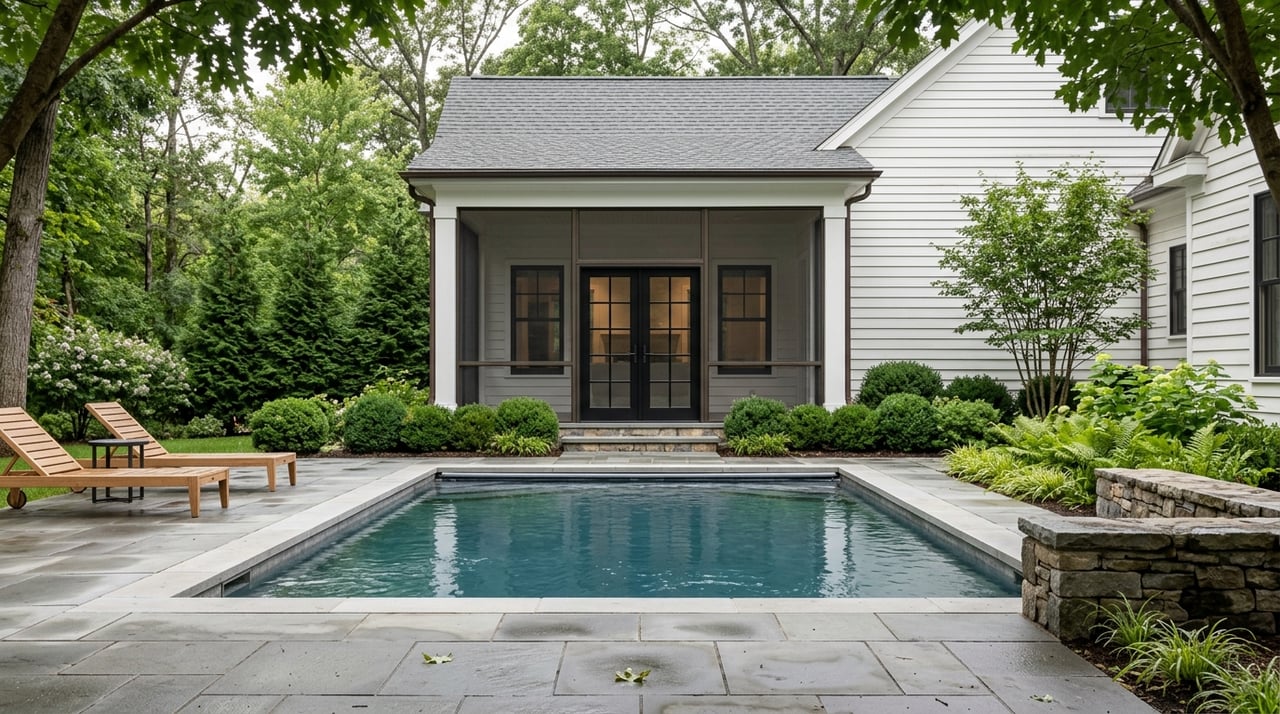
If you picture Weston living, chances are you also picture time spent outside. In a town known for large residential lots, mature trees, and abundant open space, outdoor areas often feel like a true extension of the home rather than an afterthought. If you are buying or selling in Weston, it helps to know which features local buyers tend to notice most. Let’s dive in.
Why outdoor living matters in Weston
Weston has a distinct residential character. The town describes itself as a community with two-acre zoning, minimal commercial development, and abundant natural open space, all within about 45 miles of New York City.
That setting shapes how buyers experience a property. Outdoor living is not just about a pretty backyard. It is about how well a home connects you to privacy, trees, fresh air, and usable space across the seasons.
Town planning materials add more context. Over 28% of Weston’s land area is open space and recreation, and 98.5% of housing units are single-family detached. In practical terms, that means decks, patios, porches, and lawns often play a major role in how buyers compare one home to another.
Features Weston buyers love most
Decks that feel connected
A broad deck tends to stand out when it feels tied to the main living areas. Buyers often respond well when the kitchen, family room, or dining area opens easily to an outdoor space that is ready for meals, entertaining, or a quiet morning coffee.
In Weston, this matters because the lot itself is part of the lifestyle. A deck that looks out over mature trees or a private rear yard can make the natural setting feel more usable and inviting.
Patios for easy entertaining
Patios are popular because they create a grounded, flexible outdoor room. They can support dining, lounging, and casual gatherings without requiring the full commitment of a larger landscape project.
For many Weston buyers, the appeal comes down to comfort and flow. A well-placed patio can make a wooded lot feel organized and livable, especially when it sits close to the home and includes room for seating and dining.
Screened porches and covered spaces
One of the smartest outdoor features in Weston is a space that works beyond peak summer. Nearby climate data shows cold winters, warm summers, more than 53 inches of annual precipitation, and nearly 50 inches of annual snowfall.
That kind of seasonality makes screened porches, covered terraces, and sheltered sitting areas especially attractive. Buyers often appreciate spaces that offer shade in summer and a bit of protection in spring and fall.
Pools and hot tubs for summer use
Outdoor upgrades nationwide often include swimming pools and hot tubs, according to Houzz’s 2024 survey. In Weston, these features can fit naturally into the larger-lot setting when they are well integrated with the home and surrounding landscape.
They are usually best understood as lifestyle features, not guarantees of value. For the right buyer, a pool or hot tub can make summer living more enjoyable and help a property feel like a retreat.
Privacy from trees and planting
Weston’s natural-resources planning highlights the role of mature trees in visual screening, noise reduction, cooling hot summer days, and tempering winter winds. That gives buyers a practical reason to care about tree cover beyond appearance alone.
A property with established trees or low-maintenance planting can feel more settled and more private. In Weston, that sense of separation is often part of the appeal, especially for buyers seeking a peaceful residential setting.
Outdoor living that works across seasons
Summer comfort matters
July temperatures in the nearby NOAA normals average highs near 84.9°F and lows around 64.1°F. In warm, humid stretches, buyers tend to notice whether an outdoor area offers relief through shade, airflow, or a covered section.
That is why retractable shade, tree canopy, and thoughtful seating placement can make a difference. These details help an outdoor area feel usable during the hottest parts of the day.
Shoulder-season spaces stand out
Weston’s outdoor lifestyle is not limited to July and August. Protected spaces such as screened porches and covered patios can extend how long you comfortably use the outdoors in spring and fall.
Lighting also matters here. Research on outdoor design points to lighting and passive cooling as practical ways to extend livable space, helping patios and decks stay inviting beyond daylight hours and peak summer weeks.
Winter still shapes buyer thinking
January averages in the nearby climate data are about 35.5°F for highs and 20.5°F for lows. Even if buyers are not planning to sit outside every winter day, they still notice whether outdoor spaces feel durable, protected, and easy to maintain.
In Weston, that often means asking simple questions. Is there cover over a key sitting area? Does the layout make sense when leaves are down? Will snow and wet weather limit access, or does the design still feel manageable?
What buyers look for beyond acreage
In Weston, a large lot alone does not always tell the full story. Buyers often care just as much about what parts of the property are truly usable.
A home may sit on significant acreage, but if the outdoor areas feel steep, disconnected, or difficult to enjoy, the space may not deliver the same impact. By contrast, a smaller portion of level, well-defined, and private outdoor living space can feel more valuable in daily life.
When buyers tour homes, they often respond to a few practical details:
- Direct access from main interior rooms
- Defined areas for dining, relaxing, or entertaining
- Shade, cover, or screening for comfort
- A sense of privacy from trees or planting
- Outdoor spaces that feel easy to maintain
These features help buyers imagine not just owning the property, but actually using it.
Weston’s setting adds to the appeal
Part of outdoor living in Weston is what exists beyond the property lines. The town’s Parks and Nature resources highlight destinations such as Devil’s Den Preserve, Lachat Town Farm, the town dog park, Bisceglie-Scribner Park, Morehouse Farm Park, and Keene Park.
Weston also notes that Devil’s Den is the largest continuous preserve in Connecticut and the largest tract of protected land in densely developed Fairfield County. Aspetuck Land Trust adds to that outdoor identity, with year-round trailed preserves across the region, including Trout Brook Valley Preserve spanning 1,009 acres in Easton and Weston.
For buyers, this helps reinforce the town’s lifestyle. A home’s deck or patio may be private, but it also sits within a community where trails, preserves, and outdoor recreation are part of everyday life.
What this means if you are buying
If you are shopping in Weston, it helps to look past staged furniture and ask how the outdoor space really functions. Focus on whether it supports the way you want to live, whether that means quiet evenings, outdoor dining, summer recreation, or time outside in the shoulder seasons.
A few smart questions to ask during a showing include:
- Which outdoor spaces connect best to the kitchen or main living area?
- How much sun and shade does the yard get?
- Is there a covered or screened area for less predictable weather?
- How much of the lot feels usable day to day?
- Do trees and planting add privacy without creating too much upkeep?
These questions can help you compare homes more clearly, especially in a market where lot size alone does not tell the whole story.
What this means if you are selling
If you are preparing to sell in Weston, outdoor spaces deserve thoughtful presentation. Buyers are often drawn to homes where the exterior feels like a continuation of the interior lifestyle.
That does not always require a major renovation. In many cases, the goal is to show how the space can be used: a clean deck layout, a defined dining area on the patio, comfortable porch seating, and a clear view of privacy and tree cover.
For Weston homes, strong photography also matters. Outdoor spaces tend to show best when the setting, natural light, and relationship to the house are easy to understand at a glance.
The bottom line on outdoor living in Weston
In Weston, outdoor living is woven into the local housing story. Large lots, mature trees, open space, and a four-season climate all shape what buyers value and how they evaluate a home.
The features that tend to stand out most are the ones that make the property feel usable, comfortable, and connected to everyday life. Decks, patios, screened porches, covered terraces, pools, and natural privacy features all help turn a wooded setting into a place you can truly enjoy.
If you are thinking about buying or selling in Weston and want local guidance on which outdoor features resonate most in today’s market, reach out to Heather Lindgren for thoughtful, personalized support.
FAQs
What outdoor living features do Weston home buyers like most?
- Buyers in Weston often respond to decks connected to main living areas, patios for dining and entertaining, screened porches or covered terraces, pools or hot tubs for summer use, and privacy created by mature trees or low-maintenance planting.
Why does outdoor space matter so much in Weston, CT?
- Weston’s residential character includes two-acre zoning, minimal commercial development, abundant open space, and a housing stock made up mostly of single-family detached homes, which makes private outdoor areas an important part of daily living.
How can you tell if a Weston lot is truly usable?
- Look at how easily you can access the outdoor space, how much of the yard is level and functional, whether there is shade or cover, and whether the layout supports activities like dining, relaxing, or entertaining.
Do covered porches and screened porches help in Weston’s climate?
- Yes. With warm summers, cold winters, and regular precipitation, covered and screened spaces can make outdoor areas more comfortable in summer and more usable in spring and fall.
Are trails and preserves part of Weston’s lifestyle appeal?
- Yes. Weston’s outdoor identity includes places such as Devil’s Den Preserve, Lachat Town Farm, Morehouse Farm Park, Keene Park, and nearby Aspetuck Land Trust preserves, which support an active connection to nature.