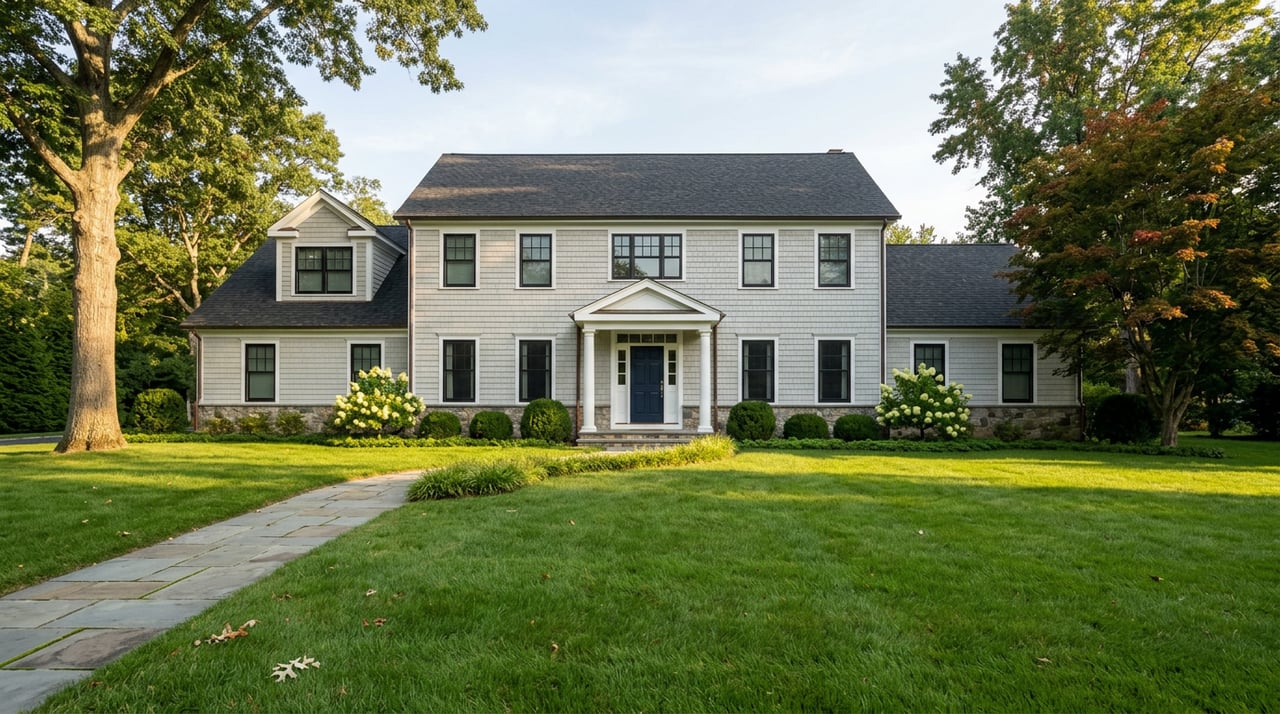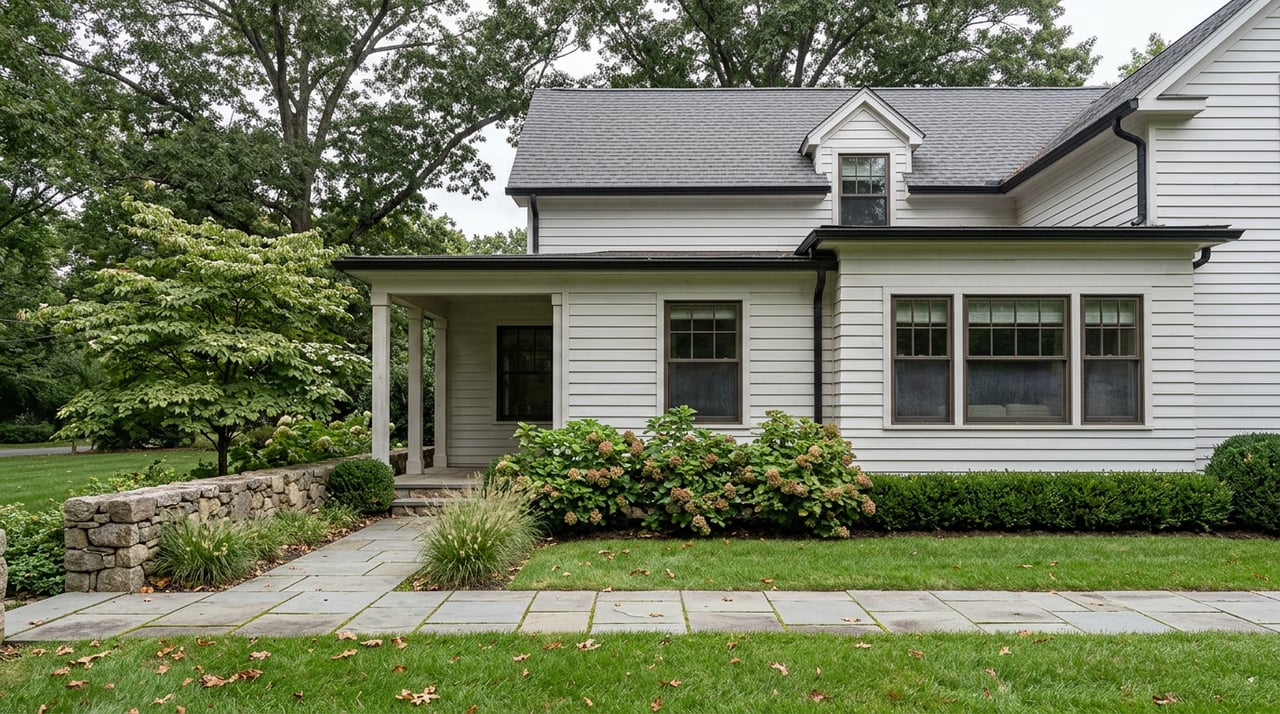
Picture two buyers who found nearly identical houses in Wilton this fall. Same decade of construction, same well and septic setup in the yard, same asking price range. One is financing with a conventional loan. The other is using an FHA loan. By the time they reach the inspection period, they are living in two different transactions, and the house itself has nothing to do with it.
That gap is the part of buying a well-and-septic home in Wilton that rarely gets explained until someone is already under contract. Connecticut does not require a well inspection to close on a home, full stop. What actually gets tested, and how strictly, depends far more on the loan program than on the condition of the system sitting in the backyard.
The state doesn't require it. Your lender might.
A private well inspection is not a legal condition of closing anywhere in Connecticut. It is strongly recommended for any property on a private well, and most purchase and sale agreements build in a window for the buyer to test one, but nothing in state law forces the issue.
Lenders are a different story. Government-backed loans, FHA, VA, and USDA, typically require a water test and a minimum distance between the well and the septic system as a condition of the loan itself. Conventional loans usually skip that requirement entirely unless something during the inspection raises a flag. So the buyer with the government-backed loan is walking into a mandatory water test and a distance check that the buyer next door, financing conventionally, may never be asked to complete.
Here is roughly how that plays out across loan types:
| Loan type | Water test required by lender | Well-to-septic distance checked | Typical effect on timeline |
|---|---|---|---|
| Conventional | Usually not, unless a red flag appears | Usually not | Minimal, buyer can opt in voluntarily |
| FHA | Yes | Yes | Adds a scheduling step before clear-to-close |
| VA | Yes | Yes | Adds a scheduling step before clear-to-close |
| USDA | Yes | Yes | Adds a scheduling step before clear-to-close |
None of this means a conventional buyer should skip testing. It means the safety net that catches problems automatically is only there for some buyers, and everyone else has to choose to build it into their contract.
What the test actually checks, once someone orders it
A well and septic inspection in Wilton is really two separate inspections wearing one name. The septic side usually involves pumping the tank and evaluating its condition. The well side is a water potability test plus, often, a mechanical check of the pump, pressure, and wellhead.
At minimum, Connecticut recommends testing well water for total coliform, E. coli, nitrates, pH, and hardness. Depending on the property's history and location, a buyer may also want to test for arsenic, radon, or volatile organic compounds. None of that is exotic. It is the baseline most well-services companies in this part of the state run as a matter of course.
Combined, the two inspections typically run from a few hundred dollars to a bit over a thousand, which is a modest line item against a Wilton purchase price but a real one to budget for, especially since it often lands during an already tight inspection window.
Wilton's own rulebook adds another layer
Beyond what a lender requires, Wilton's health code sets its own physical standards for how a well and septic system have to relate to each other on a lot. No septic tank, leach field, or seepage bed can sit within 75 feet of a well or spring, and no well can be built within 75 feet of a discharge point from a sewage system. A septic tank itself has to hold at least 500 gallons below the outlet invert, with a minimum liquid depth of 36 inches.
Those numbers matter most on older Wilton properties, where a well and septic system might have been sited decades before the current code existed. A system that predates the modern setback rules is not automatically a violation, but a buyer's inspector checking distances during a sale can surface a gap between what was acceptable when the system went in and what would be required today. That gap is exactly the kind of thing an inspection period is designed to catch, and exactly the kind of thing that surprises out-of-state buyers who assumed a working system means a compliant one.
Any septic work in town also has to clear the Wilton Health Department, which is staffed by a full-time director who serves as the town's Chief Sanitarian, currently Barrington A. Bogle, along with an Assistant Sanitarian. Both are certified to perform the required inspections on septic installations, and no septic system can legally be covered over until that office has inspected and signed off. If a system needs work before closing, that office is the one that has the final word, not the buyer's inspector and not the seller's contractor.
Who actually does this work
Wilton and the surrounding Fairfield County towns have a working bench of companies that handle these inspections and installs regularly, which matters because septic and well work here runs into the same terrain challenges no matter who is doing it. Anderson Septic Service, a family-run company now in its fourth generation, handles design, installation, pumping, and repair across Wilton and lower Fairfield County. William Dexter Septic has designed and installed more than 900 systems in what its own materials describe as the challenging geography of southwestern Connecticut, and coordinates directly with local health departments, conservation commissions, and wetlands offices during permitting. Eastern Water Solutions and Mad River Well Services both handle well-specific inspections, including the mechanical and water-quality testing lenders ask for. Wind River Environmental covers septic pumping and maintenance in town, and JP Martin Building Co, which also operates as AJM Septic, has stepped in for sellers who discover a failed system mid-inspection and need an engineered plan fast enough to keep a closing date intact.
That last scenario is common enough to plan around. A seller who finds out at inspection that the system has failed does not necessarily lose the closing date. The more typical outcome is an engineered plan and a signed quote in hand by closing, with the physical repair completed afterward. That path only works if everyone involved, agent, seller, and installer, moves on it quickly once the inspection report comes back.
Age is not the same thing as failure
One instinct worth resisting is treating an older tank as a problem by default. A well-maintained septic system that has been pumped on a normal schedule can function for decades past its install date, and a functioning 25-year-old tank does not need to be replaced just because it is old. The inspection should be evaluating performance, not counting candles. Buyers who ask for a wholesale replacement based on age alone are usually negotiating against a number that has no relationship to the system's actual condition, and sellers who understand that distinction going in are in a much stronger position to keep the transaction on schedule.
A few questions worth asking early
Is a well inspection legally required to close in Connecticut? No. It is not a state requirement, though most purchase agreements allow for one and most lenders on government-backed loans will require it as a loan condition.
What if my system doesn't meet the current 75-foot setback? An older system that predates the current code is not automatically a violation, but it is worth raising with the Wilton Health Department early rather than discovering it during a time-sensitive inspection window.
Should I worry about a system just because it's old? Not on its own. Ask for pumping records and a performance evaluation rather than treating age as a stand-in for condition.
None of this is a reason to avoid a well and septic property in Wilton. It is a reason to know, before the inspection clock starts, which version of the process your financing has put you in. That is the kind of detail that is easy to miss from a listing photo and expensive to discover for the first time under contract.
If you are weighing a Wilton purchase or preparing to list a home on a private well and septic system, Heather Lindgren can walk you through what your specific loan program will and won't require before you are locked into a timeline. Contact Heather to talk through your next move in Wilton.